Impacted Canine Teeth: Why They Happen and How They Are Treated
Canine teeth, the pointed ones next to your incisors, play a big role in biting, chewing, and giving your smile its shape. Sometimes, though, a canine does not erupt where it should. Parents in Chhatarpur often come to us worried after noticing their teenager has a baby tooth that will not fall out, or an adult patient notices one canine looks crooked or never grew in at all. This article explains why this happens, how we diagnose it, and what treatment options look like.
Why Do Canine Teeth Fail to Erupt Properly?
Canines have the longest journey of any tooth, developing high up in the jaw and traveling down into position. This long path means several things can go wrong along the way.
- Lack of space: Crowded jaws leave no room for the canine to come in straight.
- Abnormal tooth position: The developing tooth bud may be angled incorrectly from the start.
- Extra or missing teeth: Supernumerary (extra) teeth or missing lateral incisors can block the canine's path.
- Early loss of baby teeth: This can cause nearby teeth to drift and close off the space meant for the canine.
- Genetics: Impacted canines sometimes run in families.
When any of these factors prevent the canine from reaching its normal position, it becomes "impacted," meaning it is stuck under the gum or bone, either partially or fully.
How Dentists Diagnose an Impacted Canine
Diagnosis usually starts with a simple observation. If a child is around 11-12 years old and the baby canine is still firmly in place with no sign of the permanent tooth, or if there is a visible bulge in the gum where the tooth should be erupting, it is worth investigating further.
Clinical Examination
We gently feel along the gum ridge to check if the canine can be detected under the surface. Asymmetry, where one side has erupted normally and the other has not, is often the first clue.
X-rays and Imaging
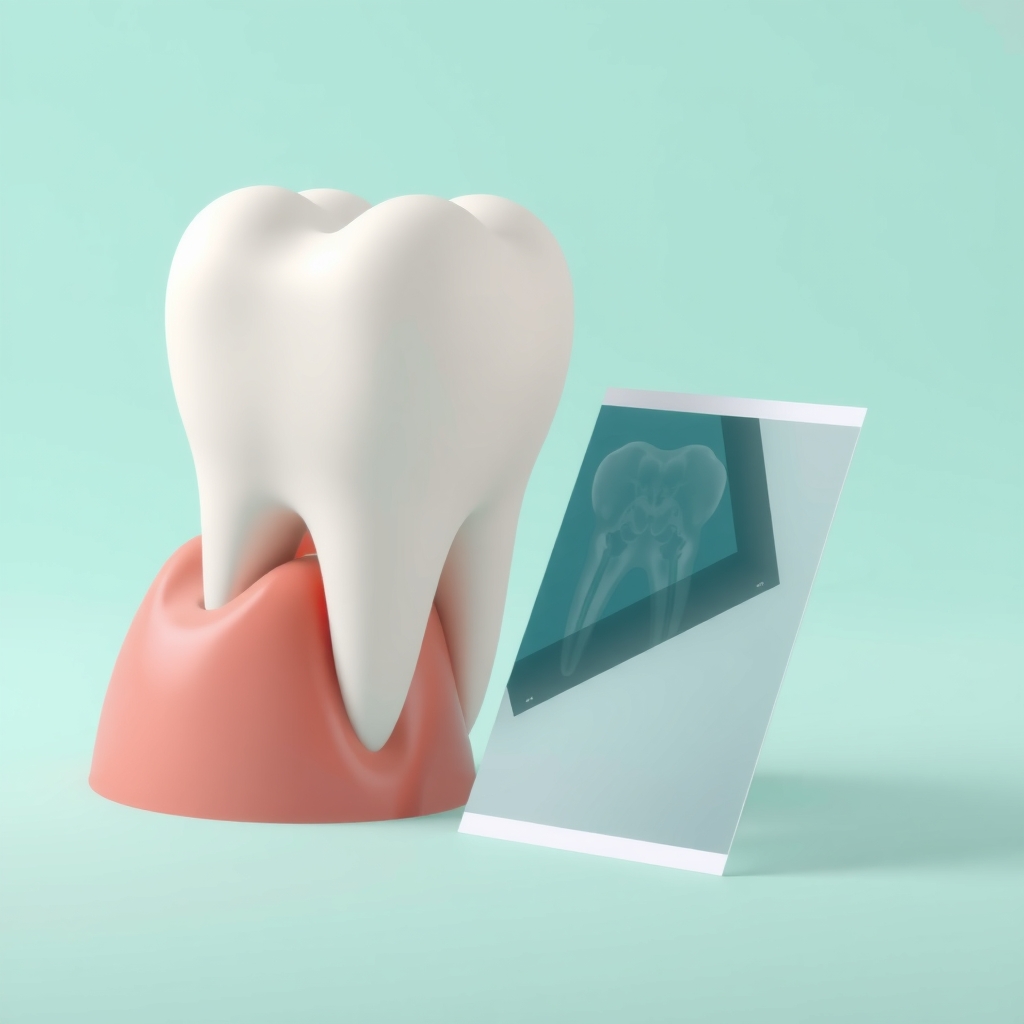
X-rays are the main tool for confirming impaction and understanding its exact nature.
- Panoramic X-ray (OPG): Gives a wide view of all teeth and shows the general position of the unerupted canine.
- Periapical X-rays: Focused images that help assess the angle and depth more closely.
- CBCT (3D scan): Used in more complex cases to pinpoint the tooth's exact location relative to nearby roots and nerves, which is especially useful for planning surgical exposure.
These images help us determine whether the tooth is likely to erupt on its own with guidance, or whether it needs surgical help.
Treatment Options for Impacted Canines
Treatment depends on the child's age, how severely the tooth is impacted, and its exact position. Here are the common approaches, usually considered in order of least to most involved.
1. Monitoring
If the canine is only mildly out of position and the patient is young, we may simply observe with periodic X-rays, since there is still room for natural correction as the jaw grows.
2. Space Creation with Orthodontics
Often, crowding is the real problem. Braces or clear aligners can create space in the dental arch, giving the canine room to erupt naturally over several months.
3. Extraction of the Baby Tooth
Removing an overretained baby canine can sometimes be enough to allow the permanent tooth to find its own path, particularly in younger patients where there is time for the tooth to adjust its course.
4. Surgical Exposure with Orthodontic Guidance
When the canine is too deeply impacted or badly angled to erupt on its own, a minor surgical procedure exposes the tooth under the gum. A small bracket is often bonded to it, connected to an orthodontic wire or chain, which gently guides the tooth into its correct position over time. This is a well-established, predictable approach used worldwide for impacted canines.
5. Extraction of the Impacted Canine
In rare cases where the tooth is severely malpositioned, fused to bone, or causing resorption of neighboring roots, removal may be recommended, with a prosthetic replacement considered afterward.
| Treatment | Best suited for | Typical range (INR) |
|---|---|---|
| Monitoring with X-rays | Mild impaction, young age | ₹500 - ₹1,500 per visit |
| Orthodontic space creation | Crowding related impaction | ₹25,000 - ₹90,000 (full treatment) |
| Surgical exposure with bracket | Moderate to deep impaction | ₹8,000 - ₹20,000 |
| Extraction of impacted tooth | Severe or non-correctable cases | ₹3,000 - ₹10,000 |
These are approximate figures for planning purposes only, and your dentist will confirm the right path after reviewing your X-rays and clinical findings. If you are in Chhatarpur, New Delhi and have noticed a missing, delayed, or crooked canine tooth in yourself or your child, an early evaluation gives the widest range of treatment options and the best chance of a straightforward correction.
Have questions about your teeth?
Dr Vijay's Dental SPA · Chhatarpur Enclave, New Delhi
Frequently asked questions
At what age should parents worry about a missing canine?
If your child is 12-13 and the permanent canine has not appeared or feels unusually positioned, it is a good time to get a dental X-ray. Early checking around age 10-11 is even better since canines normally erupt between 11 and 13 years.
Can an impacted canine be left untreated?
In some cases, especially in older adults with no symptoms, mild impaction is simply monitored. But in growing children and teens, leaving it untreated can cause crowding, root damage to nearby teeth, or cyst formation, so a dentist's evaluation is important.
Is surgery always needed for an impacted canine?
No. Many cases are managed with monitoring or by creating space with braces so the tooth erupts naturally. Surgical exposure is only recommended when the tooth is too deeply positioned or angled to come in on its own.
Does treatment for an impacted canine hurt?
The surgical exposure procedure is done under local anesthesia and is generally comfortable. Mild soreness for a few days afterward is normal and manageable with routine pain relief advised by your dentist.
Treatment costs mentioned on this page are indicative ranges for the Chhatarpur, New Delhi region. Your exact cost depends on your case and will be confirmed after a clinical examination at the clinic.