How to Brush and Floss Properly With Braces
Wearing braces is a great step toward a straighter smile, but it also creates extra places for food and plaque to hide. Brackets, wires, and bands make brushing and flossing more challenging, which is why patients in orthodontic treatment have a higher risk of plaque buildup, gum irritation, and white spot lesions around their teeth. The good news is that with the right technique and a bit of daily discipline, you can keep your teeth healthy and spot-free throughout your treatment.
This guide walks you through a simple, practical routine for cleaning teeth with braces, suited for patients visiting us at Dr Vijay's Dental SPA in Chhatarpur, New Delhi.
Why Braces Make Plaque Control Harder
Brackets and wires create small ledges and gaps where food particles get trapped. If plaque is not removed properly, it hardens and irritates the gums, and the minerals in your enamel start to dissolve around the brackets. This early enamel damage shows up as white, chalky patches called white spot lesions. These marks can remain even after braces come off, so prevention during treatment is far easier than fixing them later.
Brushing Technique for Braces
Use a soft-bristled toothbrush, either manual or electric, and fluoride toothpaste. Brush after every meal and snack if possible.
- Start by brushing at a 45-degree angle above the bracket, moving in small circles.
- Then angle the brush below the bracket and repeat the circular motion.
- Brush the chewing surfaces and the inner (tongue-side) surfaces of your teeth as usual.
- Do not forget your gumline and the back molars, which are easy to miss.
- Rinse your brush and check in the mirror for any leftover food specks around wires.
Spend at least two minutes brushing each time, and replace your toothbrush sooner than usual since bristles wear out faster when cleaning around brackets.
Helpful Tools for Brushing
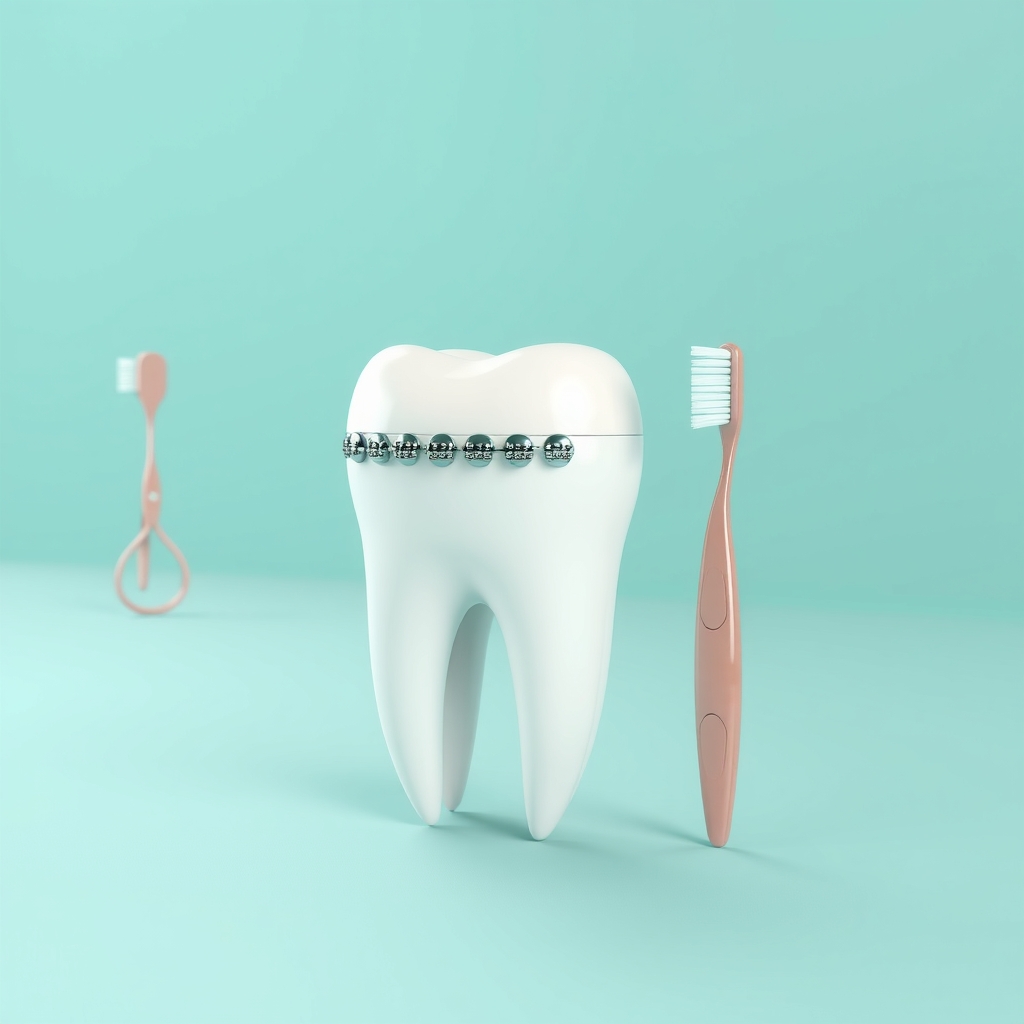
- Orthodontic toothbrush: Has bristles cut in a V-shape to fit around brackets.
- Electric toothbrush: Can make circular cleaning motions easier and more consistent.
- Interdental brush: A small, cone-shaped brush that slides under the wire to clean between brackets and teeth.
Flossing With Braces
Flossing is harder with braces because the wire blocks the normal up-and-down motion, but it is still essential for removing plaque between teeth where a toothbrush cannot reach.
- Floss threaders: A soft, needle-like tool that helps guide floss under the wire so you can floss normally between each pair of teeth.
- Orthodontic floss: Comes with a stiffened end built in, so you do not need a separate threader.
- Water flossers: Use a stream of pressurised water to flush out debris. These are useful as an extra step, especially for patients who find threading floss time-consuming, but they work best alongside brushing rather than instead of it.
Try to floss at least once a day, ideally at night before bed, so plaque does not sit on your teeth overnight.
Rinsing and Extra Protection
A fluoride mouth rinse used once daily can add an extra layer of protection against white spot lesions, especially in areas that are difficult to brush perfectly. Your orthodontist may also recommend a fluoride gel or varnish during routine visits if you are at higher risk of demineralisation.
Foods and Habits to Watch
Certain habits make plaque control much easier:
- Avoid sticky, chewy, or hard foods that can get stuck in brackets or damage wires.
- Limit sugary snacks and drinks between meals, since frequent sugar exposure feeds the bacteria that cause white spots.
- Carry a travel toothbrush or at least rinse with water after eating when you are out, such as at school, college, or work.
- Keep a small interdental brush or floss threaders in your bag for quick cleaning on the go.
Why Regular Dental Visits Still Matter
Even with excellent home care, professional cleanings during your orthodontic visits help remove plaque and tartar that daily brushing may miss. Your dentist can also check for early white spots or gum inflammation and address them before they become bigger problems. Patients in Chhatarpur, New Delhi who are undergoing orthodontic treatment are encouraged to keep up with both their orthodontist appointments and general dental check-ups for this reason.
| Cleaning Step | Suggested Frequency |
|---|---|
| Brushing | After every meal and snack, or at least 3 times a day |
| Flossing (threader or orthodontic floss) | Once daily, preferably at night |
| Fluoride mouth rinse | Once daily |
| Professional cleaning and check-up | As advised by your dentist, usually every few months |
Good oral hygiene during braces takes a little extra time each day, but it protects your enamel and keeps your gums healthy so that the smile you reveal once your braces come off is as bright as it should be.
Have questions about your teeth?
Dr Vijay's Dental SPA · Chhatarpur Enclave, New Delhi
Frequently asked questions
How many times a day should I brush with braces?
Brush after every meal and snack, which usually means three to four times a day. If brushing right away is not possible, at least rinse your mouth well with water and brush as soon as you can.
Why do white spots appear around brackets?
White spots are early signs of enamel demineralisation caused by plaque sitting around the brackets for too long. They happen when sugars and food debris are not cleaned off regularly, allowing acid-producing bacteria to weaken the enamel.
Is a water flosser enough on its own with braces?
A water flosser helps flush out loose debris but it does not fully replace brushing or floss threaders. It works best as an additional step, not a complete substitute for mechanical cleaning.
Can I use a regular toothbrush with braces?
Yes, a soft-bristled regular toothbrush works fine if used correctly, though many patients find an orthodontic brush with a V-shaped bristle cut or an electric brush makes cleaning around brackets easier.
Treatment costs mentioned on this page are indicative ranges for the Chhatarpur, New Delhi region. Your exact cost depends on your case and will be confirmed after a clinical examination at the clinic.